
Log in to save to favorites
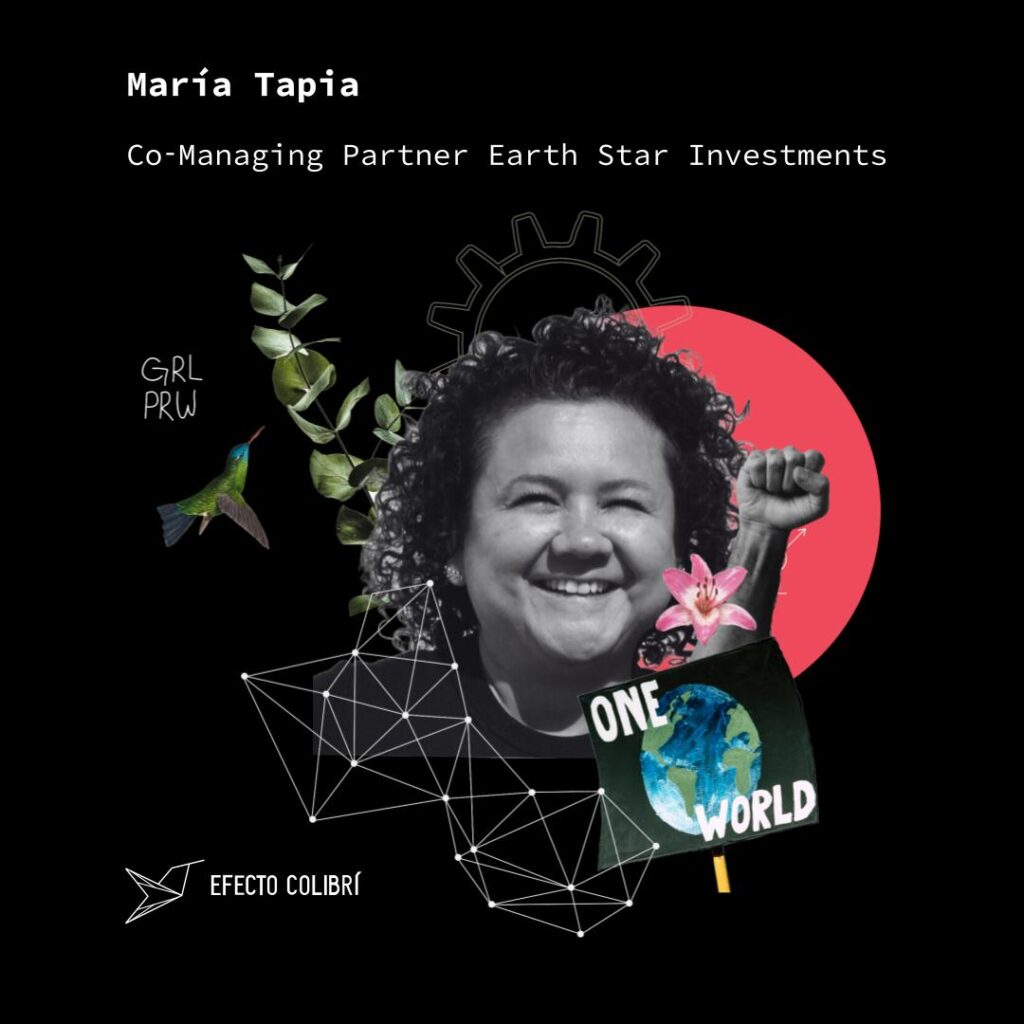
In this episode of Project Co, Ana Amrein Esnaola speaks with María Tapia, co-managing partner at Earth Star Investments, a fund backing climate deeptech in Europe through a diversity-first lens. María reflects on 25 years in finance, the reality of being “the only woman in the room,” and why DEI is not optics but a competitive advantage for better diligence, products, and outcomes. We explore next-gen protein (fermentation and cultivated), bio-based materials that eliminate microplastics, and laser + AI approaches for more precise, lower-impact mining. A practical conversation for founders, investors, and operators who want speed and rigor in the regenerative transition.
What you’ll learn:
We use cookies to improve your experience and offer you personalized content. By accepting, you help us provide you with a better service.

únete a nuestro newsletter
Dedica solo 5 minutos para contarnos cómo te impacta nuestro contenido.
Episode: Diversity-Driven Climate Tech Investing with María Tapia
Host: Ana Amrein Esnaola (Efecto Colibrí)
Guest: María Tapia (Co‑Managing Partner, Earth Star Investments)
Podcast: Project Co, Efecto Colibrí´s podcast channel
Web: www.efectocolibri.com
[00:00:06] Ana: Hello and welcome. I’m Ana, and this is a new episode of Project Co, the podcast channel of Efecto Colibrí — a channel inspired by words that start with “co”: community, consciousness, co-creation, co-evolution, and of course colibrí, which in Spanish means hummingbird. We have honest conversations with changemakers to explore mindsets and initiatives for positive change.
[00:00:32] Ana: The stories we tell and the stories we listen to have the power to regenerate our perception of ourselves and others. Stories regenerate. This is why at Efecto Colibrí we produce and distribute podcast content to inspire you to create a just, equitable, and regenerative reality for all. Discover more at www.efectocolibri.com.
[00:00:58] Ana: How can money contribute to creating a more diverse and regenerative world? A lot of the impact depends on the values that drive the people managing capital. Today I have the pleasure of introducing you to María Tapia, co-managing partner at Earth Star Investments, a firm dedicated to fostering diversity, equity, and inclusion while supporting scalable tech startups across Europe. These startups tackle complex social and environmental challenges, providing innovative solutions through technology. With over two decades of experience, María has managed $275 million in impact funds and attracted more than $1 billion in private investments. Her visionary approach not only transforms the venture capital sector but also shows that investing with values can create global, regenerative impact.
[00:02:00] Ana: María, welcome to Project Co. It’s such a pleasure to have you on board.
[00:02:07] María: Thank you for inviting me. It was such a pleasure to meet you in Barcelona.
[00:02:10] Ana: Yes — incredible. That Catapult dinner really catapulted us into this conversation.
[00:02:17] María: Yes, it’s a great community.
[00:02:20] Ana: When we met at that dinner, your project resonated with me in a very strong way. Earth Star Investments has this motto I find incredibly compelling: “Powering diversity, scaling tech.” Could you tell us a bit more about Earth Star Investments?
[00:02:49] María: Sure. I co-founded Earth Star Investments with my partner — she’s from Hungary — after working together at an NGO in the Netherlands.
Our stories were similar in seeking a place where women could speak up and do good for the planet. The organization was managed entirely by men; even though there were women on the team, we weren’t encouraged to speak out.
Despite the impact in Africa and Southeast Asia, the way it worked didn’t align with how we wanted to create change. Things were slow and overly diplomatic, following a development-institution model where approving projects takes a very long time. Climate action can’t wait. And women’s voices weren’t being heard. We’re both opinionated, so we decided to do it ourselves: we quit and set up an investment firm. Convincing my partner wasn’t easy — she wasn’t from investment — but she was connected to Europe’s entrepreneurship ecosystem and had been a founder. Our skills complemented each other: I came from investment; she brought founder experience.
[00:05:01] Ana: That’s a fantastic complementarity — investor + entrepreneur — a great lesson on choosing a co-founder. How else do you complement each other?
[00:05:20] María: We’re different in age. Culturally different — I’m Mexican; she’s Hungarian. We were based in the Netherlands — both immigrants — women, and entering an ecosystem that was new for both of us (Europe for me, investments for her). Those differences made the journey exciting.
We set up the firm to invest in early-stage technologies for the good of the environment, with a special focus on diversity, equity, and inclusion (DEI).
[00:06:27] Ana: DEI — what does that mean in practice for you?
[00:06:36] María: We look for startups that start with diverse teams. We love to back female founders and under-represented minorities building technologies that benefit humanity and the environment. For us, climate + DEI is the combination that brings our dream to life.
[00:07:31] Ana: I love it. Often founders are closest to the problem they’re solving — and you experienced discrimination and being silenced first-hand. Can we go deeper? You’re senior, with decades of experience. How did you experience being silenced?
[00:08:35] María: I started my career in financial markets 25 years ago it was completely male-dominated. I remember my first meetings: a room full of men and I was the only woman. People assumed I was the junior taking notes when I was actually leading the project. That happened 25 years ago and it still happens today.
The financial system hasn’t changed enough. There are successful women — CEOs of banks and investment firms — but many have had to sacrifice a lot to get there. Being female shouldn’t require sacrifice; it should be about equal treatment and opportunities. Culture comes from the institution — its DNA.
I’ve fought for this across organizations. And even now in Europe, raising our first fund as two women is extremely difficult. Some investors don’t want to talk about DEI — they just want returns. Those aren’t our partners. Only ~3% of private capital is managed by women. That’s terrible for the EU. We have a long way to go, and we need to balance career growth with personal life.
[00:12:25] Ana: And how do you do it? Building Efecto Colibrí has been a joy but also hard. How do you manage motherhood, founding, and life?
[00:13:18] María: It’s a mix of luck in connecting with the right people and clarity on what matters. Balance between professional and personal life is essential. Choosing the right partner helps; someone who understands you may be a bit of a workaholic and complements you. I was one until I broke — health issues force you to pause. You realize what’s important: being healthy and enjoying life. Success can make you happy, but you also learn from failure and keep going. Even without a partner — maybe with a dog: you still need time for yourself. Networking matters too: be out there and connect naturally. We met at a dinner by chance. One day you’ll sit next to someone who needs what you’re great at. Working only from your desk won’t build relationships; you need in-person connection.
[00:15:44] Ana: Earlier you said things were slow at your previous organization. How are you making things happen now?
[00:16:02] María: They tried to follow a development-bank model, but as an NGO it didn’t fit. We saw the same at COP — not much came out of the recent summit.
The UN model requires long negotiations, but the climate crisis is here. We can’t change those institutions overnight, but we can choose a different path. I had pension savings from nearly 15 years at development institutions. I believe in diversifying your portfolio, so I invested part of my savings into our project: skin in the game. Many founders do the same; mortgage homes, sell cars — because they believe. Those are the founders we like to back.
[00:18:35] Ana: What kinds of projects are you supporting now?
[00:18:43] María: We’re investing in Europe at very early stages — often university spin-offs — deep-tech solutions with positive climate impact. We started with the food industry, investing in technologies that reduce greenhouse-gas emissions from agriculture. In protein, instead of animal protein we back plant-based protein, fungi fermentation, and even cell cultivation (cultivated meat) to reduce the food industry’s carbon footprint.
[00:19:59] Ana: How does that work in practice?
[00:20:03] María: These companies develop ingredients — proteins from plants or fungi — which food manufacturers use to create products like burger patties, steaks, or fish textures. Earlier generations focused on plant-based only (some brands grew quickly then declined post-IPO). Now a new wave combines plants with fermentation and other biotechnologies for better texture and nutrition. There’s also cultivated meat — taking animal cells and growing them to produce meat without slaughter.
Regulation isn’t there yet, but we support companies advancing the tech so that when regulation is ready, they’re ready too. We know there won’t be enough conventional protein to feed the world, so we must develop alternatives.
[00:22:05] Ana: That’s fantastic. And what other examples do you have?
[00:22:25] María: Beyond protein, we look at crop resilience — editing plant cells to better withstand temperature changes. It’s deep tech, but promising. We also back new materials — bio-based, transparent packaging films with the same feel as plastic, removing fossil-based plastics from shelves — and eliminating microplastics (e.g., replacing dissolvable laundry pods’ coatings) with plant-based materials. Another example: sustainable mining. We recently met a Helsinki startup combining laser tech with AI to enable more precise drilling — reducing environmental impact.
[00:26:01] Ana: And on the DEI dimension — how do you integrate it from the start?
[00:26:11] María: Many founders reach out because we’re two women — female founders often feel more comfortable. When we get a pitch — often from men — we always ask: “What does your team look like in terms of diversity?”
Simple questions reveal whether DEI is in their hearts or it’s just a boys’ club looking for capital. If DEI isn’t genuinely valued, we’re not the right investors.
[00:27:28] Ana: It sounds like a tough fight. You mentioned only about 3% of capital reaches female managers and founders — and as a female, diversity-oriented fund you also struggle to raise. What have you learned about finding the right partners so you don’t waste time and energy?
[00:28:22] María: It’s been very difficult. Data show two things: first, only a tiny percentage of capital is managed by all-female fund managers. Second, guidance for first-time managers says your first fund should be €5–15M. Yet some “women support” programs set a minimum fund size of €30M to qualify.
How do you support first-time, all-female managers if your minimum is €30M? It doesn’t work. You end up funding large funds that add one woman to tick a box. That’s not the point. We need a fair starting line so women can compete.
Since we don’t yet meet those thresholds, we take baby steps and go back to our networks. Much of our current funding comes from Latin America — my network — while we build relationships in Europe to diversify. It takes time, but we’ll get there.
[00:30:42] Ana: Thank you, María, for taking those baby steps — and for walking this necessary path: diversity, equity, inclusion, and climate action.
[00:31:00] Ana (outro): Thank you so much for listening to this episode. It has been an absolute pleasure to have you on board. If you enjoyed it, please share it and help us amplify our positive impact. We hope to see you again very soon.
Take just 5 minutes to tell us how our content impacts you.
Sign up to our newsletter