
Log in to save to favorites
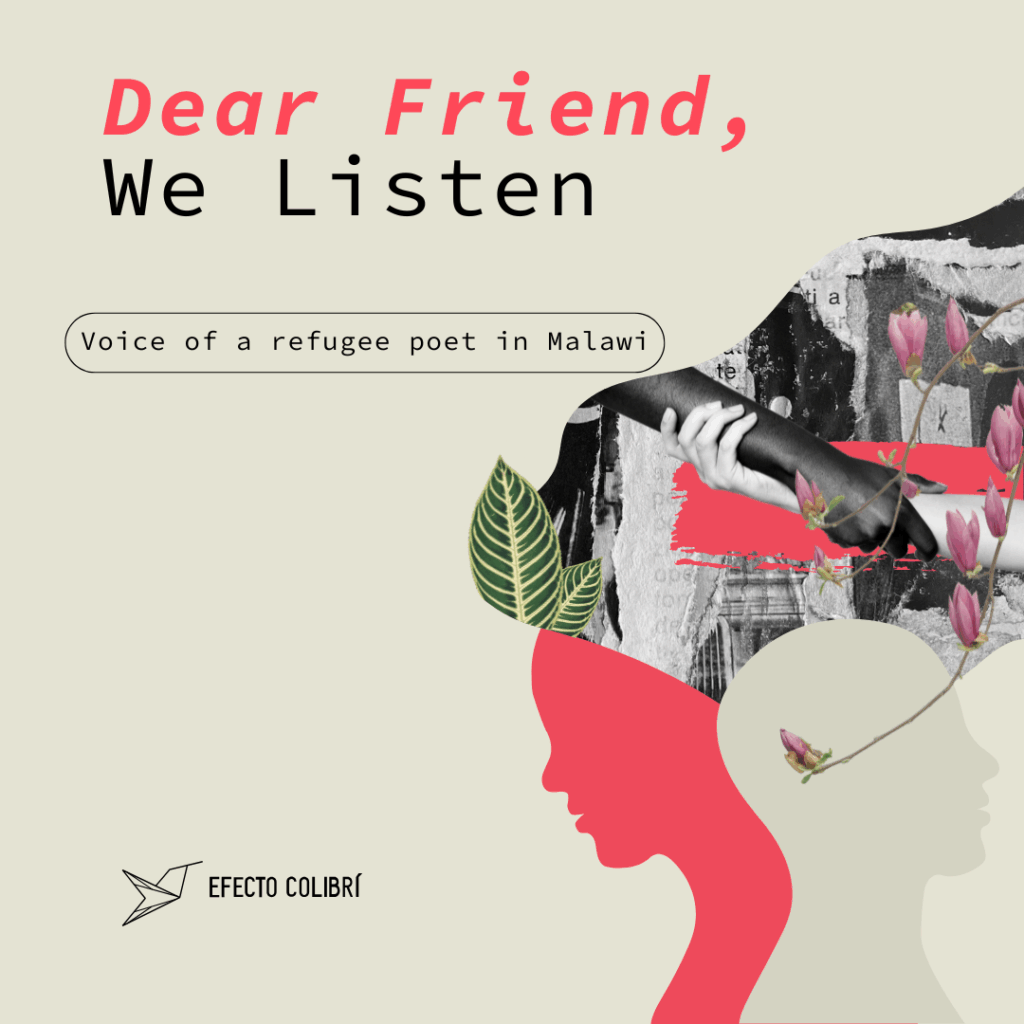
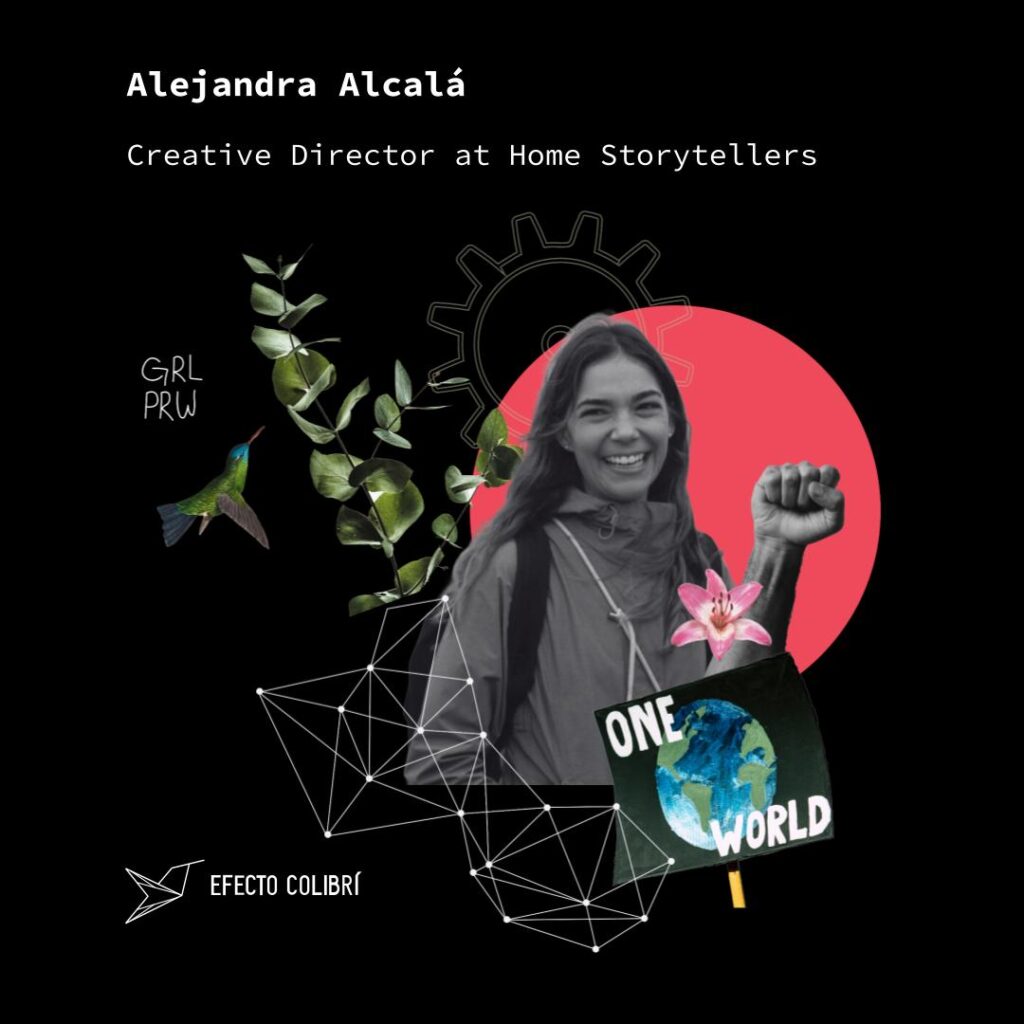
It’s a pleasure to kick off Season 10 of Project Co with Episode 144 featuring Alejandra Alcalá, Co-Founder and Creative Director at Home Storytellers. We explore new narratives, bias, and mindful attention; her feature film “We Name Ourselves” set in the refugee camp Dzaleka; and how an impact campaign turns storytelling into real-world change.
“Hope is a strategy — it’s what keeps people alive.”
Chapters & Highlights
01:58 What is a narrative? (data + emotion)
03:10 Bias, speed, and “single-version” stories
06:00 Mindful attention: which stories we let in
11:00 Fear-driven media vs. human, complex stories
13:50 Home Storytellers origin (art + social impact)
18:00 Identity & “single stories”
23:30 We Name Ourselves (Dzaleka, teen poets; art = survival)
29:35 Malawi screening tour & protagonists’ agency ·
Thanks To Home Storytellers —Jonas Barckhausen and Francisco Alcalá Torreslanda— and to Catalyst Now for making this episode possible.
We use cookies to improve your experience and offer you personalized content. By accepting, you help us provide you with a better service.

únete a nuestro newsletter
Dedica solo 5 minutos para contarnos cómo te impacta nuestro contenido.
[00:00:01] Ana Amrein Esnaola (Host): Hello and welcome. I’m Ana, founder of Efecto Colibrí, and this is a new episode of Proyecto Co—a channel inspired by words that start with co: community, consciousness, co-creation, co-evolution, and of course colibrí (hummingbird in Spanish). We have honest conversations with changemakers to explore mindsets and initiatives for positive change.
[00:00:26] Ana: The stories we tell and the stories we listen to have the power to regenerate our perception of ourselves and others—stories regenerate. This is why at Efecto Colibrí we produce and distribute podcast content to inspire you to create a just, equitable, and regenerative reality for all. Discover more at www.efectocolibri.com.
[00:00:53] Ana: It’s a pleasure to kick off Season 10 of Proyecto Co with Episode 144: a conversation with Alejandra Alcalá of Home StoryTellers about new narratives, bias, and mindful attention. We talk about her feature film We Name Ourselves and how an impact plan can turn a film into real change.
[00:01:20] Ana: Alejandra, welcome to Proyecto Co.
[00:01:22] Alejandra Alcalá: Hi Ana. Thank you so much for having me. It is such a pleasure to be here, especially because we are so aligned on the topic of new narratives—creating new narratives and giving voice to people whose voices and stories have been silenced.
[00:01:40] Ana: I’m really looking forward to this chat because I’m sure I’ll learn and deepen my knowledge on narratives. So I’d like to start with the question: what does a narrative mean?
[00:01:58] Alejandra: Narrative goes back to our very existence—to humanity’s existence. We’ve been telling stories since we began. Stories are important because they define who we are, where we come from, and they’re what sticks in someone’s mind—how people will remember something. It’s not only the facts; there’s a lot of emotion in a story. That’s where people connect and make sense of something that might be difficult to understand or completely different from their own experience, yet through emotional connection they’re able to empathize.
[00:02:45] Alejandra: We have to tell stories holistically, showing not only the positive side but also the difficulties people struggle with. Combining both gives a fuller perspective and allows people to understand narratives through a more complete lens.
[00:03:10] Ana: Do you think we’ve learned to tell stories in a biased way because we ourselves are biased and lack consciousness—that’s the best we can do? Or do you think it comes more from manipulation and bad intentions? Why would you say the stories we find on the web—or even in daily life—generally tell one version of reality?
[00:03:49] Alejandra: I try to see the best in people. I don’t like to be pessimistic and think “the media is trying to manipulate us.” But I do feel that in this industry there are a lot of interests, and unfortunately people can play with narratives for their own interests. Sometimes it isn’t even bad intentions—it’s just the way the system works. Many times it’s we need a story now—hurry. The timing and the system don’t allow you to really understand, to truly investigate and connect before bringing a story to the world.
[00:05:10] Alejandra: I also think there are people who understand the power of story and don’t use it for the best—that definitely happens. And then there’s naivety: we’re all biased in some way. I do think the media can get into our minds—it’s happened to me. I’ve thought, oh my God, how could I have this thought in my mind? So yes, we’re sometimes influenced, but we can do more to get rid of bias and to prove to ourselves that the ideas we grew up with can be unlearned if we want to.
[00:06:00] Ana: It’s difficult because it requires that we pay attention to where we put our attention—what we’re consuming, whether we believe it—becoming more aware of the stories and content we let into our lives.
[00:06:30] Alejandra: Absolutely. The first step is accepting that we all grew up with certain ideas. We’re all a little bit biased. It’s hard to accept, but if you’re able to accept it, then you can also change some things—if you want to.
[00:06:50] Ana: I have many questions, but first: how do you inform yourself in general—what are your habits for learning about reality?
[00:07:00] Alejandra: I’ll be completely honest. After I became a mom with my first child—on February 23, 2022—it was right when the war started, and I remember it affecting me a lot during my maternity. We had just finished filming The Neighborhood Storyteller, our last feature film, and I had a really strong connection with the protagonist, Asma, who was also a very young mom. We became close friends, and she told me her experience living through a war while pregnant and then with her baby.
[00:07:54] Alejandra: As many mothers know, you’re very emotional and protective. I had this urge to disconnect from all news platforms—anything that could harm me and my baby—because if I’m not well, I know that affects my family. That feeling has stayed with me. When you’re too informed, you can start to live in fear, and I’m really nervous about falling into that with my family. So I try to learn through people—through people’s experiences and the stories we tell. Not so much through the news, but through actual human connections. Even if it’s hard to hear, because you’re putting a face to someone—that’s how I’m able to handle it at this moment.
[00:08:57] Ana: That connects with what you said at the beginning—the emotional side of stories, the deep connection to another person’s experience. This is something that very often gets erased in mainstream media.
[00:09:20] Alejandra: For sure. I see a lot of fear and lack of hope in my community and friends. They read the news nonstop or are on all the platforms, constantly feeding themselves very shocking—and many times unhelpful—stories. What keeps me hopeful in my work is that I get to talk to so many action-based people doing amazing things in the world. It reminds me that not everything is bad. We don’t see this in the news—there are barely stories that are hopeful or talk about solutions. So I try to talk to people more and learn in a different way.
[00:11:00] Ana: Mainstream channels and some content creators often follow a very materialistic, capitalistic approach—more, more, more: more consumers and more readers. It’s well studied: categorization and me versus you as a strategy—create fear, create separation, and that grows the following. Your approach is different. From what I know of your work—and why it resonates strongly with Efecto Colibrí—every person contains many categories. We shouldn’t put ourselves into boxes, because then we’re back to black and white. Reality is full of grays.
[00:12:34] Ana: Someone might be a refugee or a sex worker who has gone through horror—and still there’s hope in their eyes, a spark of creativity in their reality. I really admire your work because it transmits that part.
[00:12:50] Alejandra: It’s been quite surprising for us too. When we meet the people we’re going to collaborate with—building the relationship and understanding who they are and their backgrounds—many times I think, how did they live through this? I would never be able to. And in the places where you’d think the lack of hope is most present is where we’ve seen the most hope. That has been a lesson for us, because we come back to privileged communities where hope is in question; but in the places where you think you’d feel hopeless, it’s where we’ve seen the most. Hope is a strategy—it’s what keeps people alive—and we have to learn from this.
[00:13:50] Ana: Tell me about HomeStorytellers. What is it? How did it come into existence? What do you do?
[00:13:54] Alejandra: We started six and a half years ago. It was an idea that sparked in my dad’s mind. He was the man you’d always see in a suit—serious, traveling, good job. As a child I never really understood what he did. He would joke that he made the little holes in Froot Loops. As I grew up, I understood he had a very serious and important job, and it was a very privileged life.
[00:14:30] Alejandra: In his mid-forties, he was gifted a camera and discovered a completely different, artistic side of himself none of us knew he had—he was really serious all the time. He started getting into photography more and more until he decided to do a master’s degree in fine art photography. In the course, they encouraged social projects, so he visited small towns in Mexico, doing photography and talking to people. One day he asked me to go with him. I panicked—three-hour drive, what were we going to talk about? We had nothing in common. But when we arrived, it was like seeing a completely different side of my dad. He was talking to everybody; everybody knew him. Through art, he connected not only with people but with a side of himself maybe even he didn’t know he had.
[00:15:50] Alejandra: A few years later, I was living in Barcelona. I came to study graphic design. I started working in a communications agency—great experience, lots of learning, and I reconnected with multimedia, animation, and post-production. Then my dad called me and said he had an idea for a project and wanted to invite me along. I was intrigued. I felt my work lacked deeper meaning. We were doing huge, expensive events for big companies that just wanted to show off they could—and it felt superficial. I thought I could do something more meaningful, not only for myself but also to contribute to the world.
[00:16:56] Alejandra: Of course, we had no idea what we were doing at first. Through many conversations we decided to bridge social impact with art—on his side, photography; on mine, filmmaking. We came up with creating short documentary films, surrounding ourselves with a team that knew what they were doing, and focusing on refugees. Although we hadn’t experienced forced displacement ourselves, we did have experience moving around the world and knowing what it’s like to be new in a society and feel out of place. We had a lot of privilege in those moves, but even so it was difficult. For many years I felt out of place and with no sense of home.
[00:18:00] Alejandra: For years I actually denied I was Mexican. When we lived in the U.S., I was about five. I was brushing my teeth and found a small Swiss-army-style pocketknife—it was my brother’s, three years older than me. I put it in my pocket to give to my mom and forgot. I went to school with it. During story time I felt something in my pocket, didn’t remember what it was, took it out, and everybody shouted, “A weapon!” I was five. They took me to the principal’s office, questioned me, then called my mom and questioned her. This was in Michigan. It really marked me. I decided I wouldn’t speak Spanish, wouldn’t eat obvious Mexican food, and wouldn’t say I was Mexican. My own little experience with the dangerous part of single stories.
[00:19:55] Alejandra: Later we moved to Australia, where there was much more diversity—Asian and Indian classmates—so it was easier to be from a different culture. That’s where I started saying I was from Mexico again, when I felt accepted.
[00:20:00] Alejandra: Somehow that made us connect to the experiences that forcibly displaced people may live—at an extreme—because they didn’t choose it. Their situation is completely different, but we found a connection and decided to focus there. From the beginning, we wanted to do it with a hopeful and more complete lens.
[00:20:36] Ana: It’s super interesting how certain experiences push you to deny your culture or identity to fit in. As a five-year-old, that must have been traumatizing. And for refugees worldwide, many people try to fit them into the word “refugee,” which has such a strong connotation that many don’t identify with it—it erases their humanness.
[00:21:20] Alejandra: Exactly. Our newest film, We Name Ourselves, talks a lot about that. One of the main characters is a poet who says, “The name refugee was none of my wishes.” Many poems are about not having a choice—being given a name they didn’t choose. The concept of names—naming yourself vs. being named—became a strong topic in the film.
[00:21:52] Alejandra: I often think about the stares or strange feelings people who are forcibly displaced receive when starting a new life somewhere. People aren’t even half aware of what they’ve been through, yet they’re already labeled “a refugee,” with hesitation or fear around them. I love my work because I get to see all the amazing people contributing to societies. We are lucky to integrate with different people and learn from them. I wish everyone could see how lucky that is.
[00:22:58] Ana: And you experience it in your own skin and transmit it through filmmaking—thank you for creating that positive impact. Tell us about the films and the newest one. When is it coming out? What is it about? What can we expect?
[00:23:30] Alejandra: We just finished last week—our second feature documentary, We Name Ourselves. I’m really excited it’s finally ready. It’s been about a year and a half of work. The story takes place in Dzaleka Refugee Camp in Malawi, a place many haven’t heard of. It hosts forcibly displaced people mostly from the DRC (Congo), Burundi, and Rwanda; and also some from Somalia.
[00:24:20] Alejandra: It’s very under-resourced and overcrowded. It was created to be a prison for 10,000 people, and now over 52,000 live there in very harsh conditions. Poverty is extreme. In recent years, families were living with around $5 per family per month. It’s a critical time because humanitarian aid has been removed and people are really struggling.
[00:25:00] Alejandra: The film follows a group of teenage poets we met during a scouting trip. We chose to collaborate with them because we were surprised that in a place where people struggle to survive daily, art can be so powerful. We kept asking: instead of looking for jobs or trying to make money—what I imagined I’d do—how are these kids dedicating so much time to poetry, even with the tide against them? How essential can art be where food is so scarce?
[00:26:00] Alejandra: We asked them, and many—if not all—answered: “It’s through poetry that I’m still alive.” That was shocking and illuminating. It helped us understand art as a survival strategy—a human need for expression to heal trauma, rekindle hope, and reclaim identity.
[00:26:23] Alejandra: We also found something remarkable in Dzaleka every year: the Tumaini Festival, a music, art, and culture festival—one of the largest cultural scenes in a refugee camp. They host around 50,000 guests each year, setting up big stages across the camp. It becomes a moment of joy and stress release, and it brings economy to the camp. It started 10 years ago from within the community. Tumaini means “hope” in Swahili. We witnessed the transformation during our month there: from daily monotony to a full celebration—music playing as stages are prepared; a completely different vibe. Many people feel unseen, and this is an opportunity to feel seen.
[00:28:00] Alejandra: The film’s general idea is what poetry and art mean to them, structured around preparing for Tumaini—having the chance to be on a big stage and be seen—and then returning to everyday life, because that’s the reality once the festival ends.
[00:28:30] Ana: When is the movie coming out?
[00:28:32] Alejandra: The film is ready. We’re starting the film festival phase. We’re trying to keep it quite short because until it passes, we can’t really premiere publicly.
[00:28:45] Alejandra: Alongside production, our impact team has been working on an impact campaign from the very beginning. It was important to conceive strategy early and build relationships with organizations and partners who share our values and messages—developing initiatives with tangible effects in the community. We wanted to know this film would bring change in Dzaleka, where it was made.
[00:29:35] Alejandra: Using just the teaser, we’ve already secured financing for one initiative: a screening tour across Malawi over one year in six cities, with the protagonists speaking in front of politicians and universities to advocate for better opportunities for refugees in Malawi.
[00:30:10] Ana: How do the poets feel about traveling around the country and talking to politicians?
[00:30:12] Alejandra: They didn’t expect it at all—they’re very excited. We get messages from them often. They’re eager to raise their voices. The film moves emotions, but there’s so much work after: conversation and then action. They’ll be there to do that. The agency they feel can be very powerful—they are the ones driving change, not us.
[00:31:00] Ana: Fantastic. In my opinion, it’s very responsible—it speaks to agency towards the people you collaborate with. You’re not jumping from one movie to another; you’re really investing—perhaps as much time in the impact campaign as in production?
[00:31:38] Alejandra: We’re definitely investing as much time. That really says a lot because, in the end, that’s what you want to achieve—you have a purpose. We learned this along the way. When we started HomeStorytellers, my dad and I thought, let’s just tell little stories and the world will change. It was naive, wishful thinking. We realized that if you don’t have a plan for what happens after the film is ready—and that the film is just a tiny piece—there’s no change. We learned that with our last film; that’s when we paused producing and focused 100% on the impact campaign.
[00:31:50] Ana: Super. Thank you so much, Alejandra.
[00:31:52] Alejandra: Thank you, Ana.
[00:31:56] Ana: Thank you so much for listening to this episode. It has been an absolute pleasure to have you on board. If you enjoyed it, please share it with your people and help us amplify our positive impact. We hope to see you again very soon.
[00:32:10] (End)
Take just 5 minutes to tell us how our content impacts you.
Sign up to our newsletter